Materials & Finishes
Gypsum Ceiling Designs: What to Know Before You Commit
B.I.L.D Team · 18 June 2026
The gypsum ceiling is close to a default in Ugandan interiors, residential and commercial alike. It is quick to install, it hides services, and it gives a room a finished edge that a bare slab never has. It also gets specified without much thought, and a few decisions made early determine whether it looks good in five years.
What a Suspended Ceiling Actually Buys You
A gypsum ceiling is a frame hung below the slab with boards fixed to it. The gap between the two — the void — is the point.
That void carries the electrical conduits, the ductwork, the data cabling, and the recessed light fittings. Without it, every service has to be surface-mounted or chased into concrete. A suspended ceiling is what makes recessed downlights, air conditioning, and clean cable routing possible in the first place.
It also gives you a flat, level plane. Concrete slabs in this market are rarely as flat as they look, and paint on a slab shows every undulation.
Height Is the Real Cost
Every centimetre of void is a centimetre of head height you no longer have.
In a room with a generous slab height, that is a fair trade. In a room already on the low side, a deep multi-level ceiling with a large drop can make the space feel oppressive — and that is a far more permanent problem than a dated design.
Measure the existing height before committing to a ceiling design. If the room is tight, the right answer is often a shallow ceiling with a slim perimeter drop rather than a dramatic central feature.
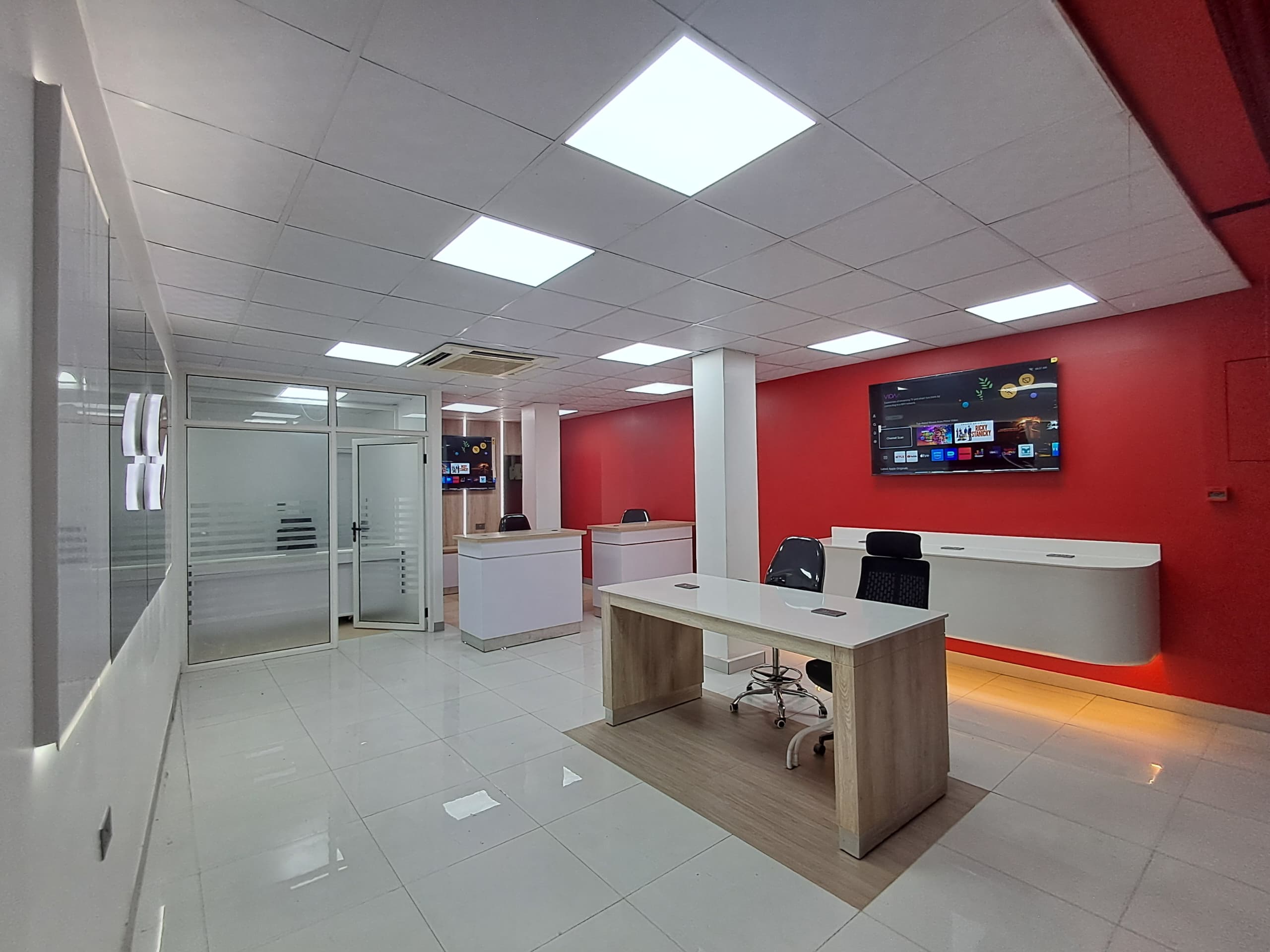
Flat, Coffered, or Multi-Level
A flat ceiling with a neat perimeter is the quietest and cheapest option, and in a room with strong joinery or a feature wall it is usually the correct one. It costs the least height.
A perimeter drop with cove lighting — a recessed channel around the edge concealing an LED strip washing light onto the ceiling — is the most effective design per shilling in this market. The light is indirect and flattering, and the drop only affects the edges of the room.
A multi-level or coffered ceiling creates zones in an open-plan space, which is genuinely useful for separating a dining area from a lounge without a wall. It costs the most in height and money, and it goes wrong most often, because a complex ceiling in a small room reads as busy rather than considered.
Lighting Has to Be Designed With It
The commonest and most avoidable failure is a ceiling built before the lighting was planned. Once boards are up and skimmed, moving a downlight means cutting, patching, and repainting.
Settle the fitting positions, the circuits, the switching, and the cove routing on an electrical and lighting plan before the frame is installed. Cove lighting in particular needs the detail drawn — the lip must be deep enough to hide the strip completely, or you see a line of bright dots instead of a glow.
Colour temperature is worth deciding too. Warm white suits living spaces; neutral white suits kitchens and offices. Mixing them across one open-plan ceiling looks like a mistake, because it is one.
Moisture, Cracking, and Where Gypsum Fails
Standard gypsum board and water are not friends. In bathrooms, kitchens, and anywhere under a roof that has ever leaked, use moisture-resistant board and fix the leak first. A ceiling installed under a compromised roof will stain and sag, and the ceiling will get the blame.
Hairline cracking at the joints is the other common complaint. It comes from movement and from joints that were taped and finished too quickly rather than from the board itself — which makes it a workmanship question, and a reason to care who installs it.
Decide It Early
A ceiling is one of the first things built and one of the last things you can change. It has to be resolved alongside the lighting, the air conditioning, and the room height, before the frame goes up.
We draw ceilings as part of ceiling, electrical and lighting plans and coordinate them on site through project supervision. You can see ceiling and lighting integration in our office fit-out project, or get in touch to have yours planned properly.
Related Work
See This In a Real Project


More Reading
Related Articles


Not Sure Which Service You Need?
Start with a consultation — we'll scope the right package for your space and budget.
Request a Consultation