Landscape Design
Landscape Design in Uganda: A Practical Guide
B.I.L.D Team · 23 April 2026
Landscape design in Uganda has an advantage most of the world does not: things grow. Reliable rainfall and a generous climate mean a compound can establish quickly. The same conditions also mean an unplanned compound turns into a maintenance problem just as quickly, and that water goes somewhere whether you designed for it or not.
This guide covers how to plan a compound properly, in the order the decisions actually have to be made.
Start With Water, Not Plants
Almost every failed compound we are called to fix has the same root cause: drainage was never designed. Uganda has two rainy seasons, and a heavy Kampala downpour moves a great deal of water in a short time.
Before choosing a single plant, settle these:
- Where does water run when it rains hard? Follow the natural fall of the plot.
- Where does it collect? Standing water kills lawns, undermines paving, and breeds mosquitoes.
- Where does it leave? Into a channel, a soakaway, or a planted swale that can absorb it.
- Is the ground falling away from the house? If it falls toward the building, fix that before anything else.
Getting this right is unglamorous and it is the difference between a compound that improves for years and one that has to be relaid.
Understand Your Soil
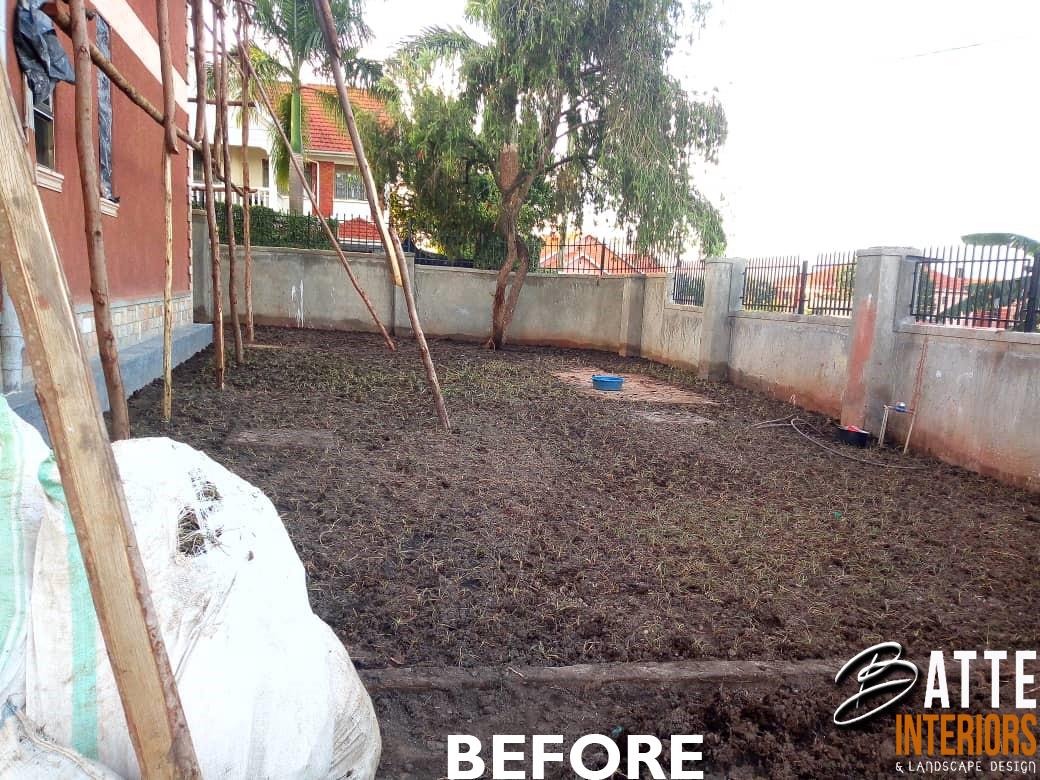
Much of central Uganda sits on heavy red clay. It holds nutrients well and it drains badly, compacts under traffic, and turns greasy in the rain.
That is workable, but it has to be acknowledged. Beds usually need organic matter dug through them and often need raising slightly so roots are not sitting in water. Sandier soils elsewhere in the country have the opposite problem — they drain fast and need organic matter to hold moisture through a dry spell. A site assessment is where this gets established, because you cannot tell by looking from the gate.
Zone the Compound Before You Plant
A compound is a set of rooms, the same as a house. Decide what each area is for before deciding what goes in it:
- Arrival. The gate, the driveway, the walk to the front door — the first thing anyone sees.
- Living. Where people actually sit outside. Needs shade and a surface that stays usable after rain.
- Utility. Drying, bins, water tanks, a generator. Screened, not hidden as an afterthought.
- Green. Lawn, beds, and trees, doing the real work of making the place feel established.
- Circulation. How you get between them without walking across wet grass.
Zoning first is why a designed compound feels larger than an undesigned one of the same size.
Planting That Suits the Climate
The best planting schemes here are layered — trees for structure and shade, shrubs for mass and screening, groundcover to hold soil and suppress weeds.
A few principles that hold consistently:
- Plant in groups, not singles. Repetition reads as intentional; one of everything reads as a nursery.
- Design for the mature size. The commonest error is spacing plants for how they look on planting day.
- Use shade deliberately. A well-placed tree changes how usable an outdoor area is at midday.
- Keep hedges to what you will maintain. Every metre of hedge is a permanent trimming commitment.
Fast growth is a double-edged tool. It establishes a compound in a season, and it means anything you plant too close to the house or the boundary will need managing sooner than you expect.
Hard Landscaping Holds It Together
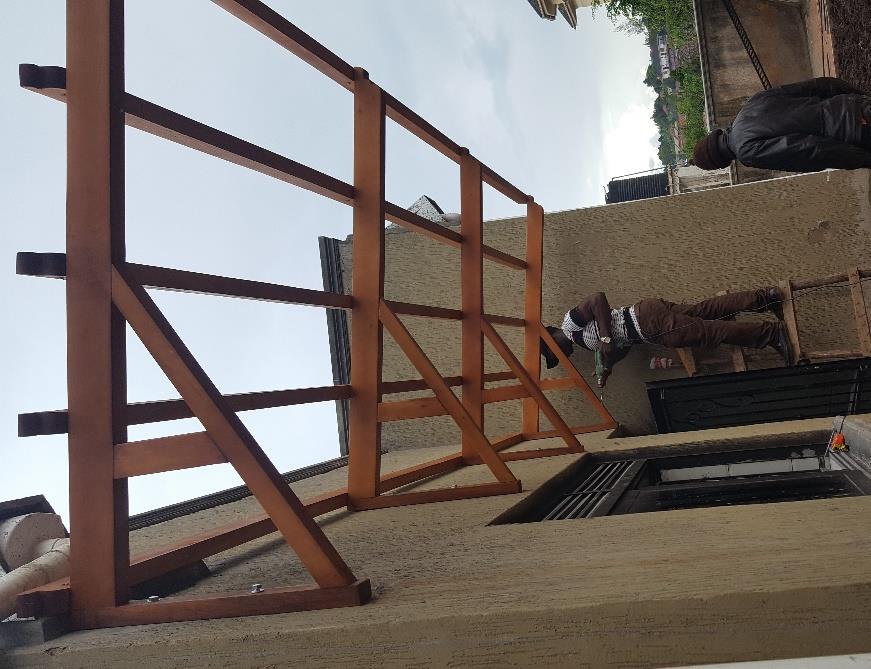
Paving, walkways, retaining walls, pergolas, and edging are what make a garden usable in every season. In a climate with this much rain, surfaces need grip when wet and a fall that sheds water rather than pooling it.
Edging deserves particular mention: a clean, physical edge between lawn and bed is the cheapest thing you can do to make a compound look maintained, and it saves hours of trimming.
Be Honest About Maintenance
Design the compound you will actually maintain. A large manicured lawn with intricate beds needs regular, skilled attention. If nobody is going to give it that, the design should be simpler — more groundcover, more shrub mass, less trimmed edge, and mulched beds that suppress weeds on their own.
An over-designed compound that is not maintained looks worse after two years than a modest one that is.
From Plan to Planted
A compound can be phased. Drainage and hard landscaping come first because they involve machinery and disruption; planting follows and fills in over the seasons. What should not be phased is the plan itself — laying paving before knowing where the beds go is how you end up cutting it out again.
You can see compound transformations we have completed in our landscape portfolio. If you have a plot that floods, compacts, or has simply never been planned, get in touch and we will start with a site visit.
Related Work
See This In a Real Project

More Reading
Related Articles
Not Sure Which Service You Need?
Start with a consultation — we'll scope the right package for your space and budget.
Request a Consultation