Landscape Design
Small Garden Ideas for Compact Compounds
B.I.L.D Team · 6 August 2026
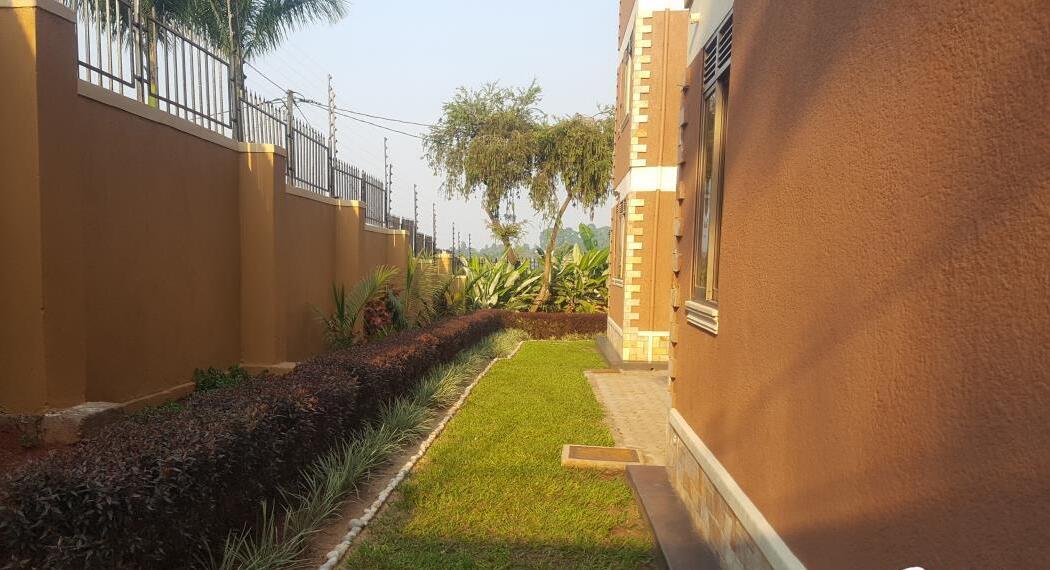
Plot sizes in and around Kampala keep shrinking, and the strip of ground around a house is often narrow, overlooked, and treated as leftover space. Designed properly, a small compound can be the most used part of a property. Left undesigned, it becomes somewhere to park and dry clothes.
Do Not Divide It Into Small Pieces
The instinct with a small space is to give every function its own little area. It is exactly wrong — a compact compound cut into six small zones reads as six small spaces, and none of them are usable.
Do the opposite. Choose one thing the space is primarily for, give that the majority of the area, and let everything else be secondary. A single generous seating terrace with planting around it feels considerably larger than the same area split into a token lawn, a small terrace, and a narrow bed.
Use the Vertical Surfaces
A narrow compound has little ground and plenty of wall — boundary walls, the house elevation, the side of a store. That vertical area is the space you have not been using.
Climbing plants on a boundary wall, wall-mounted planters, a green screen against a blank elevation, or a simple trellis all add planted volume without consuming floor. Trees with a narrow, upright habit do the same, giving height and shade from a small footprint.
Planting up the walls also solves the commonest problem of a small compound: being overlooked. A planted boundary gives privacy without the closed-in feeling of raising the wall.
Make the Paving Do Real Work
In a small compound, lawn is often a poor use of ground. A small patch of grass in heavy shade, walked across constantly, is difficult to keep looking good and does not give you anywhere to sit.
Paving that patch instead gives you a usable outdoor room in every season, and the planting moves to the edges where it performs better anyway. Where you want green underfoot in a small area, groundcover in the beds and a paved route through them is more robust than a lawn nobody can keep.
Keep the paving pattern simple and lay it so it reads as a single surface. Busy patterns and many small units make a small area look smaller, and a fall that sheds water matters as much here as anywhere — see our landscape design guide on drainage.
Layouts That Add Apparent Space
A few devices reliably make a compact compound feel larger:
- Run lines diagonally. A path or paving laid across the diagonal uses the longest dimension available.
- Hide the boundary. Planting that obscures where the wall actually is removes the eye's sense of the limit.
- Give it somewhere to travel. A path disappearing around a corner implies more space beyond.
- Repeat a few plants. Three species used repeatedly reads as calm and generous; twenty species reads as cluttered.
- Keep furniture in scale. One properly sized bench beats a large dining set that fills the terrace.
Screen the Utility Properly
Every compound has to accommodate bins, a water tank, drying lines, and often a generator. In a small compound these are impossible to hide by distance, so they have to be handled by design.
A slatted timber screen, a run of dense shrubs, or a low wall with planting in front turns the utility zone into a deliberate part of the layout rather than the thing you avoid looking at. Position drying lines where they get sun and are not the first thing seen from the sitting area or the gate.
Light It and You Double Its Use
A small compound used only in daylight is being used half the time. Modest lighting changes that entirely — a couple of fittings washing a planted wall, low-level light along a path, and something warm over the seating.
Uplighting a single tree or a textured wall is the highest-impact move available and needs very little equipment. Keep levels low and warm; bright floodlighting flattens a small garden and irritates the neighbours.
Start With a Plan
Small spaces are less forgiving than large ones, because there is nowhere to absorb a mistake. A scaled plan showing paving, planting beds, utility, and circulation is quick to produce at this size and settles the questions before anything is laid.
Our landscape design service starts with a site assessment, and you can see compound transformations in our landscape portfolio. Get in touch to have your compound planned.
Related Work
See This In a Real Project
More Reading
Related Articles

Not Sure Which Service You Need?
Start with a consultation — we'll scope the right package for your space and budget.
Request a Consultation